
Walking guide · Central Medellín
Medellín Walking Tour: How Free Walking Tours Work and a Self-Guided Route
A free walking tour in Medellín is a guided walk through the centre where you pay nothing to book and tip at the end, as much as you decide. If you prefer to go on your own, the classic circuit links Parque de Berrío, Iglesia de la Veracruz, Plaza Botero, Palacio de la Cultura, Parque de las Luces and Parque San Antonio in about 2 to 3 hours. This guide gives you the route, the precautions and an honest comparison with a private guide.
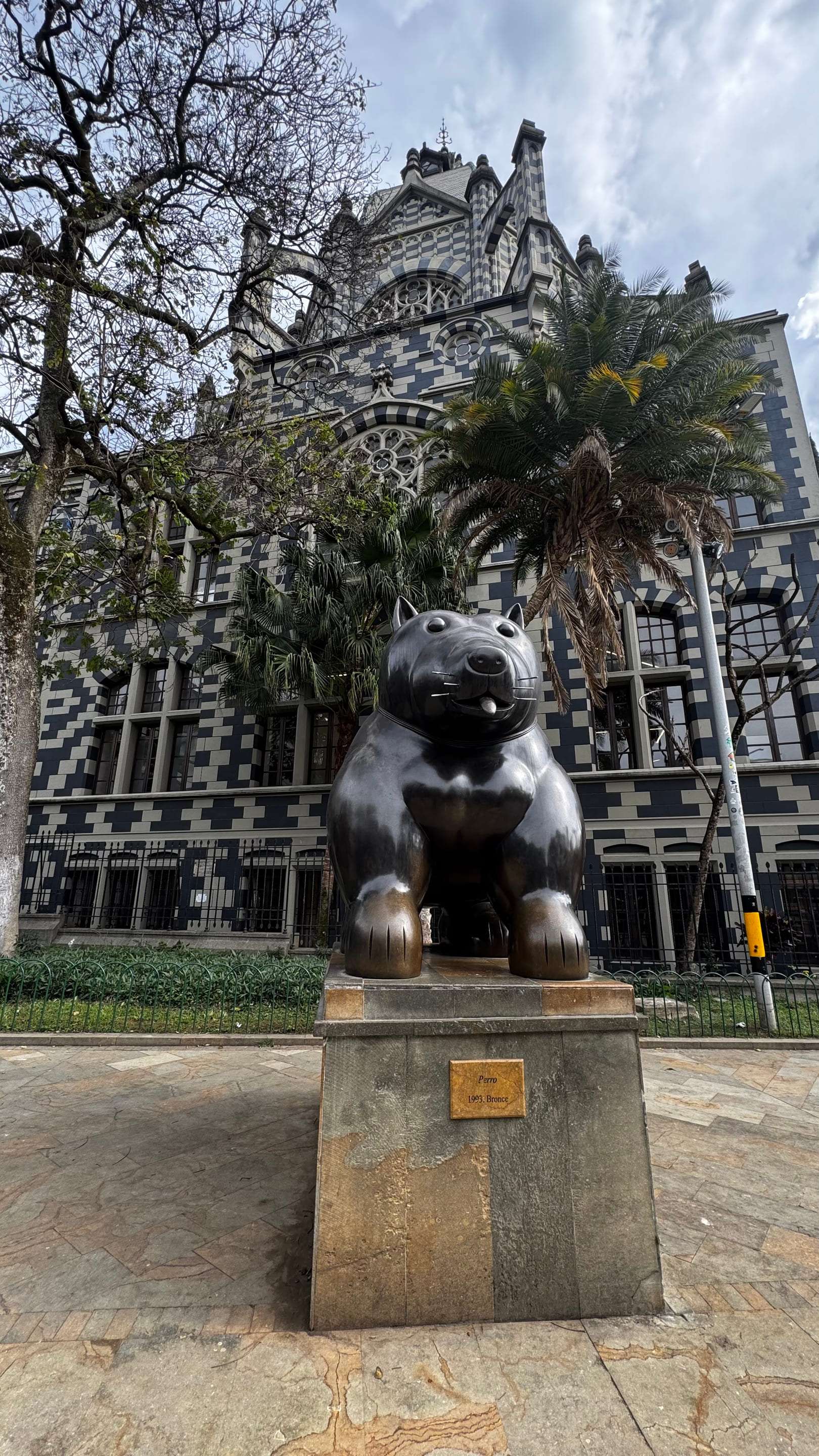
- AreaCentral Medellín (La Candelaria and Guayaquil)
- Stops6, all connected by Metro
- Suggested time2 to 3 hours on foot
- Typical free tourAbout 3 hours, tip at the end
- Best timeMorning, on a weekday
- MetroParque Berrío and San Antonio
- PH ToursWe do not run free tours: private guide
What a free walking tour in Medellín is and how it works
A free walking tour is a walk through the historic centre with a local guide. Booking costs nothing and at the end each person pays what they think is fair, based on how the tour went. That is why it is called free: the guide lives on tips, not on a fixed fee.
Several companies and independent guides offer one in Medellín, for example Real City Tours, which you book on platforms such as GuruWalk. Its tour of the centre lasts around 3 hours and 15 minutes and starts in La Candelaria. In those listings the suggested tips run from roughly 10 to 50 dollars or euros per person, depending on the listing, and they are a suggestion, not an obligation.
- Free booking online (sometimes you can turn up without one, but it is better to book).
- Groups of strangers from different countries, with one guide per group.
- A fixed meeting point and a set start time.
- Usually about 3 hours, with stops at squares and buildings in the centre.
- Payment at the end: a tip in cash or through the app, depending on the guide. Ask beforehand.
Free tour, self-guided route or private guide: which suits you
All three formats work, but they solve different things. The free tour is the cheapest way to get a live explanation. Doing it on your own gives you total freedom and costs only the Metro and a coffee. A private guide is for anyone who wants their own pace, unlimited questions and peace of mind in an area where it pays to stay alert.
PH Tours does not run free tours. We do private tours, with pickup at your hotel and a guide in English or Spanish. If you are after a free option, the route below lets you do it yourself. If you would rather have company, the option is further down.
| Free walking tour | On your own | Private guide | |
|---|---|---|---|
| How you pay | Booking is free and you tip at the end; the amount is up to you | No guide: just your own costs (Metro, tickets, coffee) | Agreed beforehand on WhatsApp, no surprises at the end |
| Who comes | A group of strangers, sometimes a big one | You and whoever you invite | Only your group |
| Pace | The group's, on a fixed schedule (usually about 3 hours) | Yours | Yours: more time on what interests you |
| History and context | Live explanation, a different guide each time | Whatever you read beforehand (this guide) | Explanation tailored to you and answers to your questions |
| Safety | The guide is with you | Depends on your attention and the time of day | A local guide who knows which streets to avoid and when |
| Language | Depends on the guide and the booking | Whatever you like | English or Spanish |
A self-guided walking route through central Medellín in 6 stops
This route starts at Parque Berrío Metro and ends at San Antonio Metro, so you need no taxi and no trip back to the start. The times are a suggestion for a relaxed visit without going into museums. If you add the Museo de Antioquia, allow 1 to 2 more hours.
Parque de Berrío
15 minMetro: Parque Berrío station (Line A)
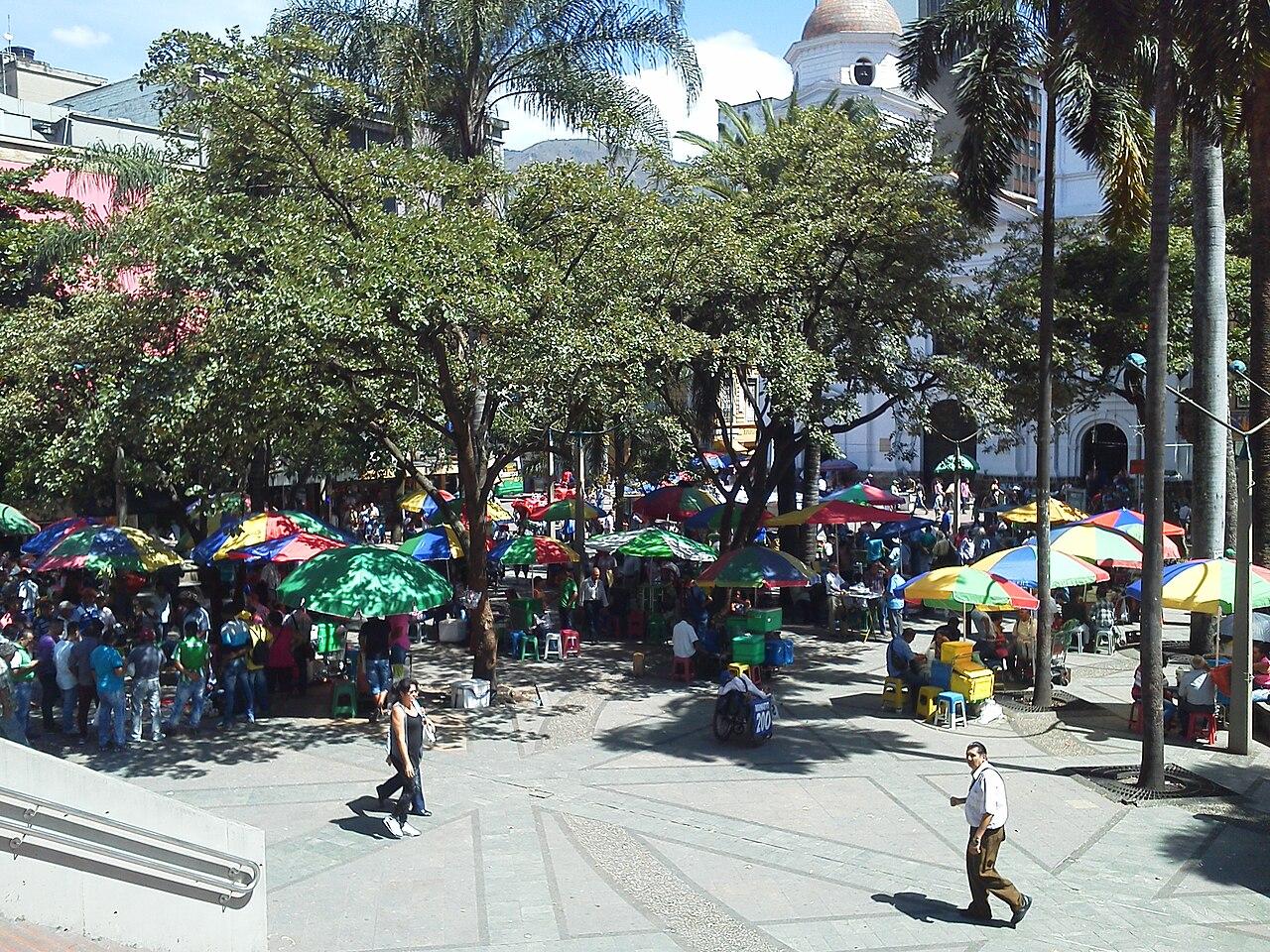
Photo: Motero Colombia, CC BY-SA 4.0, Wikimedia Commons This is the founding heart of the centre: the old main square tied to La Candelaria church, now ringed by bank and commercial buildings put up after the fires of 1917, 1921 and 1922. In the middle stands the statue of Pedro Justo Berrío, unveiled in 1895, and on one corner Fernando Botero's “La Gorda”. On another corner is “El Desafío” by Rodrigo Arenas Betancourt. The Metro station is right here, so this is the easiest place to start.
Tip: Get here early: by mid-morning the park is full of street vendors, pigeons and people chatting. It is real downtown, not a postcard.
Keep walking to Veracruz
Iglesia de la Veracruz
10 min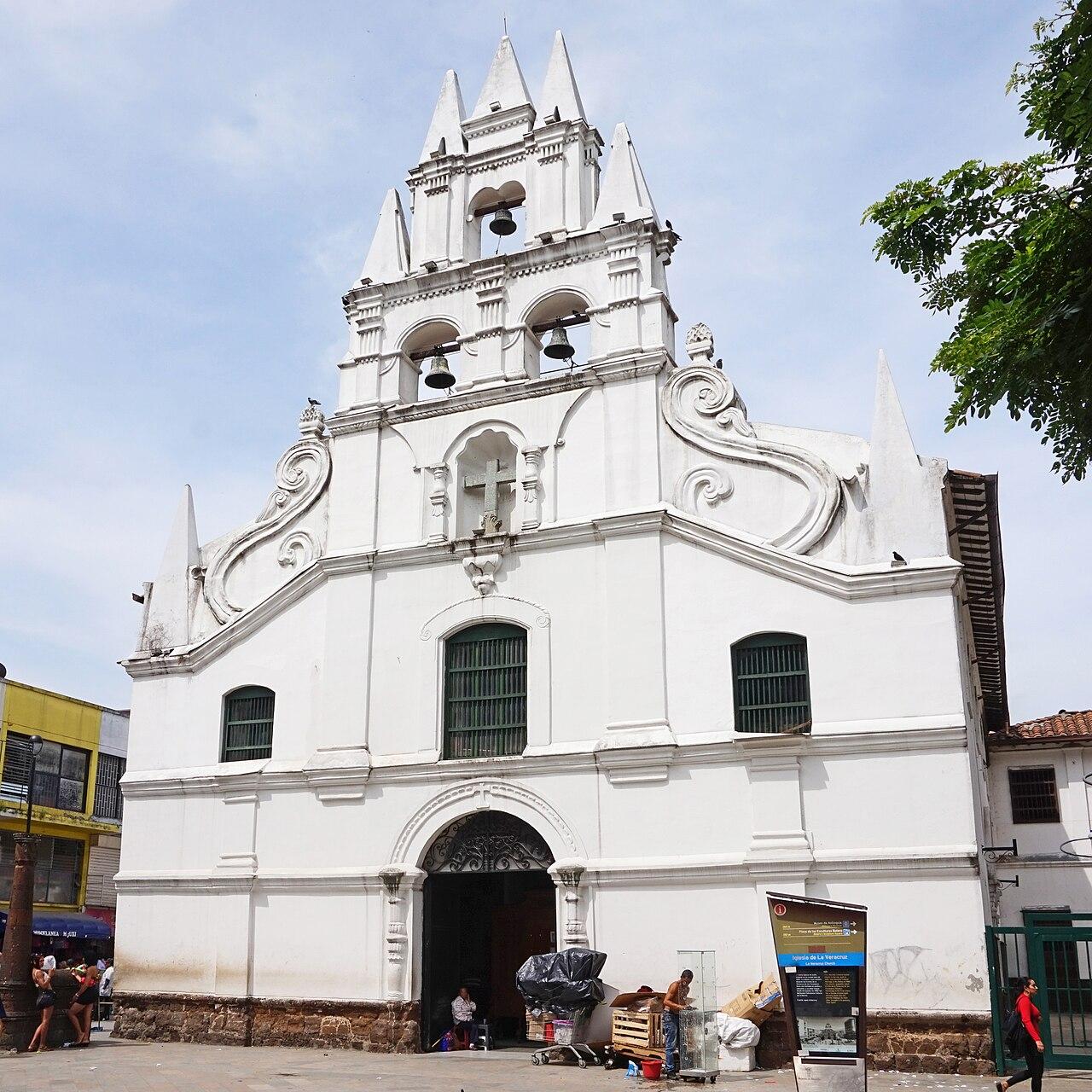
Photo: Bernard Gagnon, CC BY-SA 4.0, Wikimedia Commons A few blocks on foot brings you to the Plazuela de la Veracruz. The present church was built between 1791 and 1803 and blessed in 1809, on top of an earlier 17th-century chapel. It is a plain white church in the middle of the downtown noise, and it helps you picture colonial Medellín before the tall buildings.
Tip: It is a working church: go in quietly, without a cap and with your shoulders covered. Mass times change, so check before you go if you want to see the inside.
Keep walking to Botero
Plaza Botero
30 min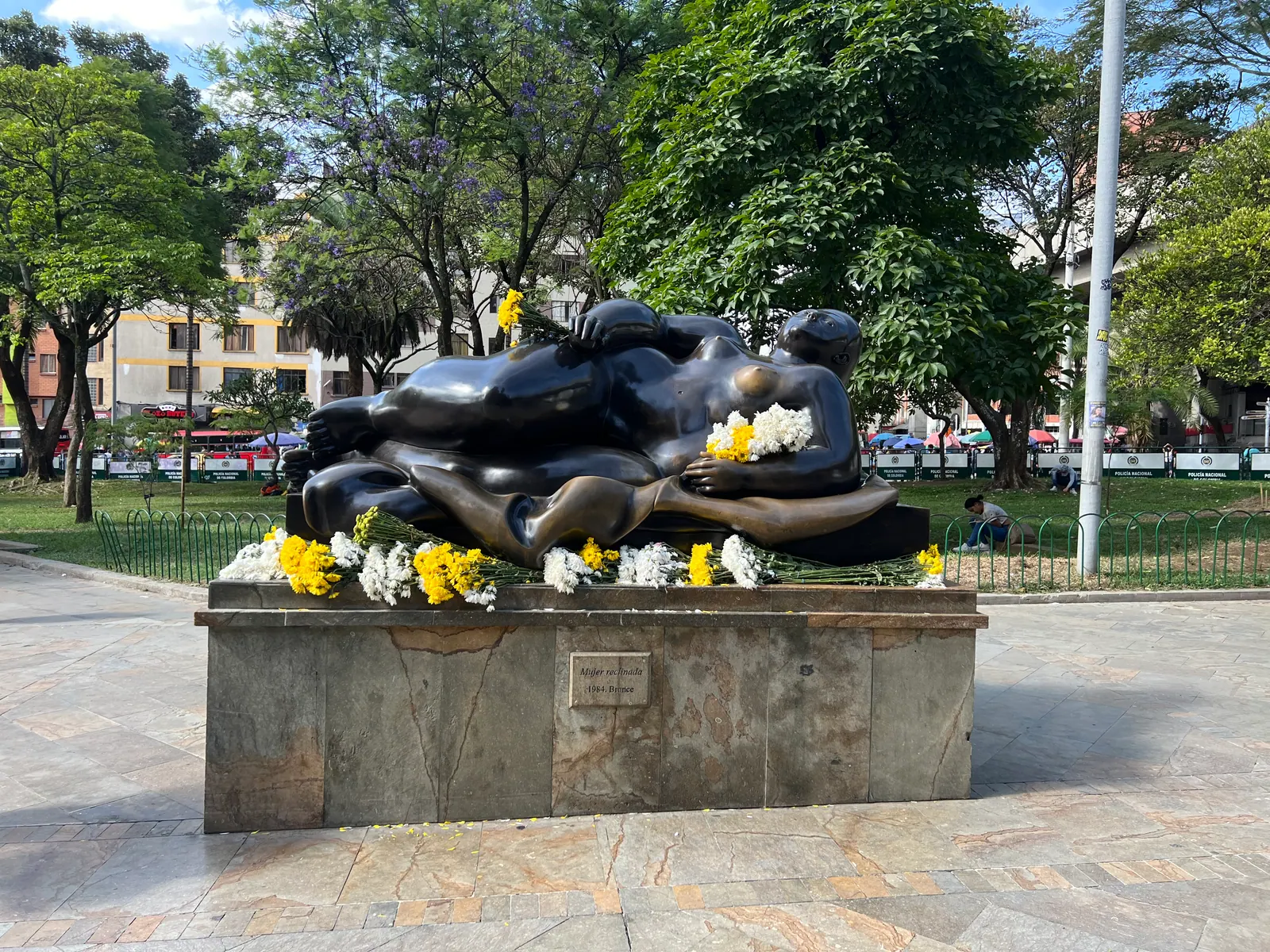
Twenty-three monumental bronze sculptures by Fernando Botero, at ground level and without pedestals, made to be touched and photographed. Botero donated them to the city in 2000, when the Museo de Antioquia opened its new building, and the plaza covers about 7,000 m². The rounded figures with exaggerated volumes are the most recognised image of Medellín in the world.
Tip: The sculptures invite you to come close, but watch your phone and backpack: this is the most photographed spot in the centre and also the busiest.
Keep walking to Palacio
Palacio de la Cultura Rafael Uribe Uribe
15 min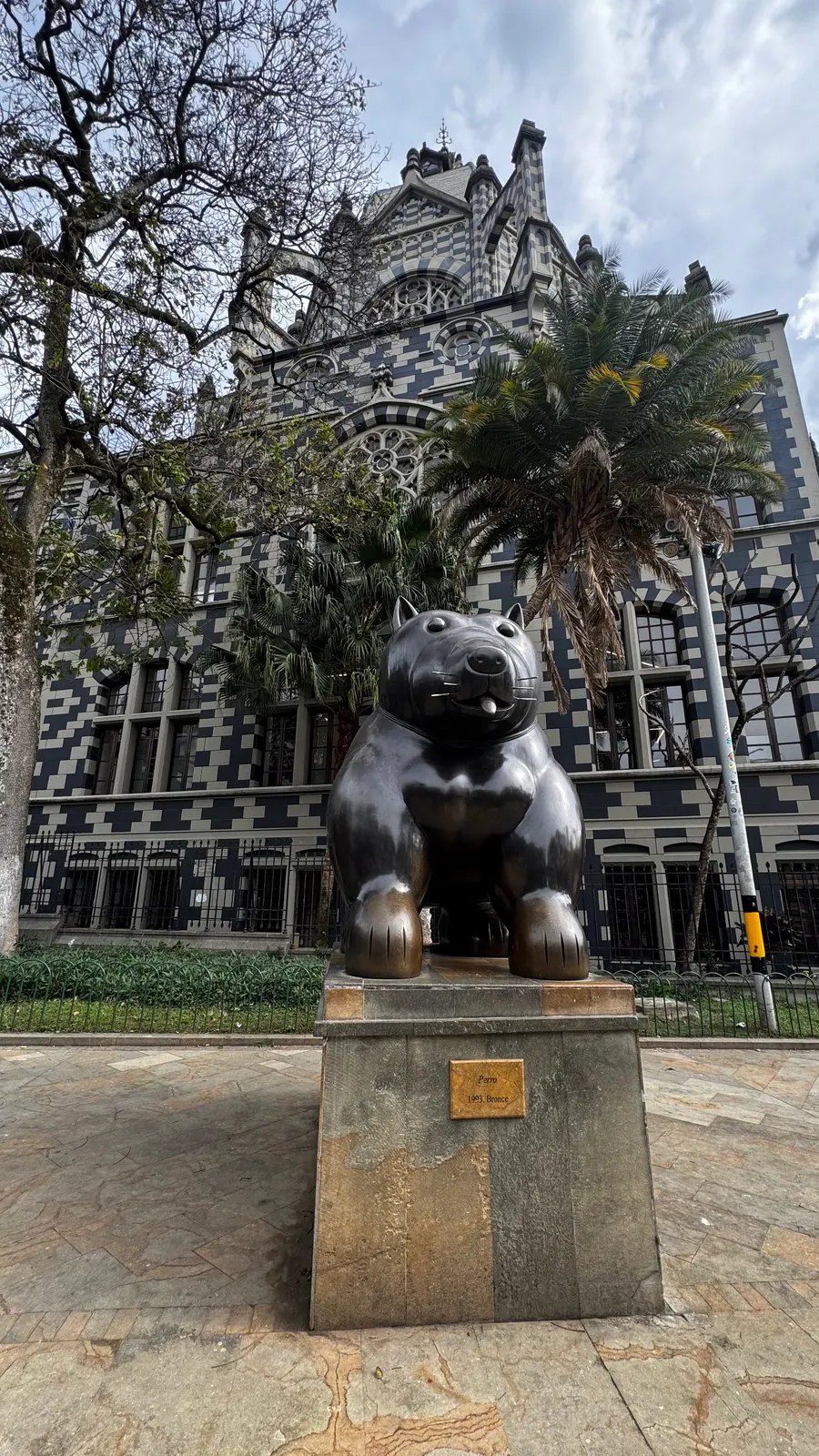
The black-and-white neo-Gothic building that closes the plaza. Belgian architect Agustín Goovaerts designed it, work began around 1920, and it was the seat of the departmental government until 1987. Today it houses the Antioquia Institute of Culture and Heritage and exhibitions. Even if you do not go in, it is worth walking around it to see the towers, arches and façade details.
Tip: If you want art as well as bronze, the Museo de Antioquia is right next to the plaza and holds the Botero collection. Check opening hours and the entry price before you go.
Keep walking to Luces
Parque de las Luces (Plaza Cisneros)
15 min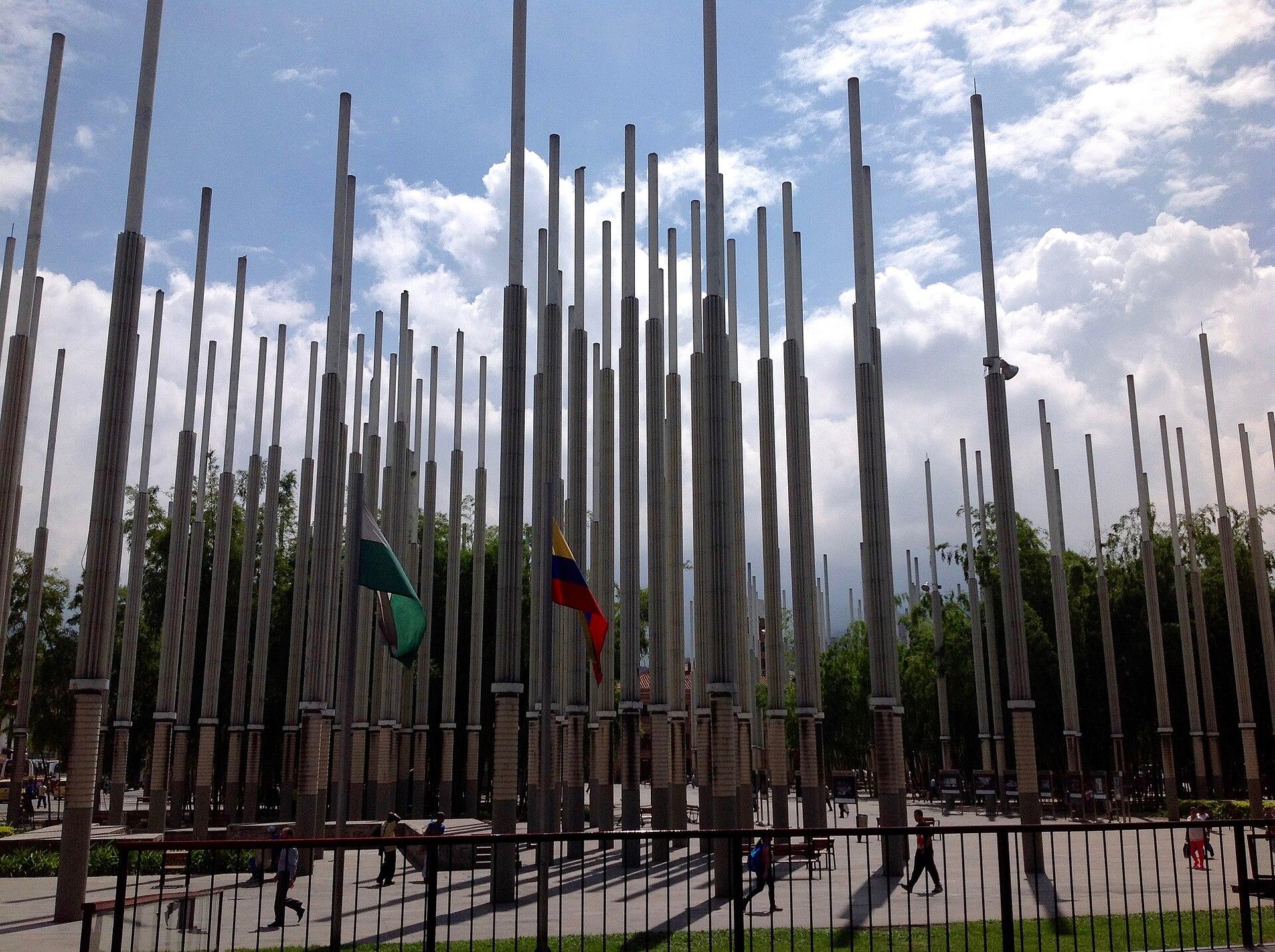
Photo: HaseyJDBS, CC BY-SA 4.0, Wikimedia Commons A forest of 300 light poles about 24 metres tall, opened in 2005 beside the EPM Library, on the site of a former covered market. By day it gives shade and odd photographs; at night it lights up with thousands of spotlights. It is named after engineer Francisco Javier Cisneros, who pushed for the Antioquia Railway.
Tip: This is the stop that asks for the most care: cross in daylight, without your phone in hand, and do not linger. It is better seen by day than by night.
Keep walking to San Antonio
Parque San Antonio
20 minMetro: San Antonio station (Lines A and B)
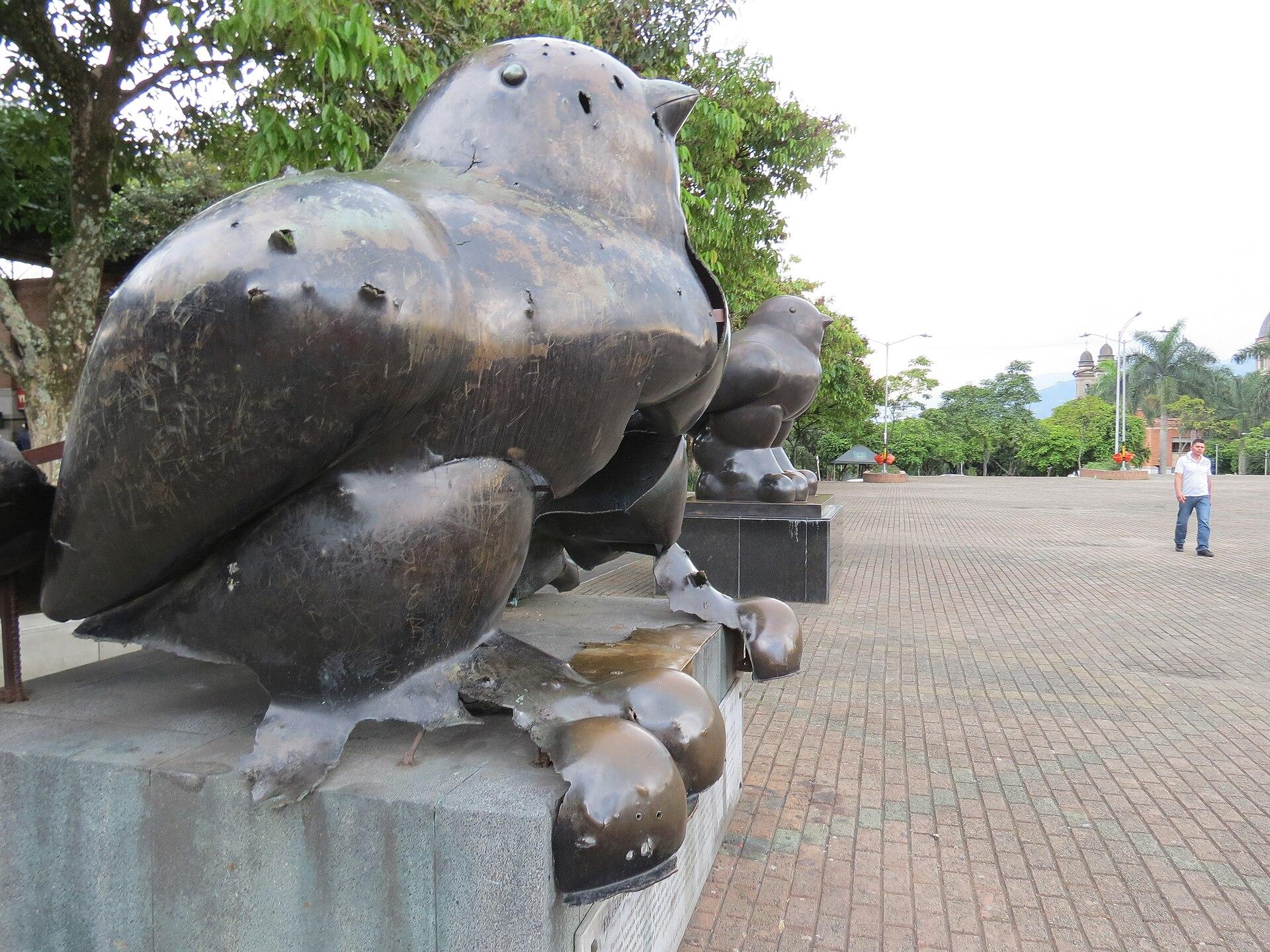
Photo: Roapolice, CC BY-SA 3.0, Wikimedia Commons Here are Botero's two “Birds”. The original was destroyed by a bomb on 10 June 1995, in an attack that killed 23 people. In 2000 the artist donated a replica and asked that both stay side by side as a memorial. It is a short, serious stop, but it explains the Medellín of the 1990s, and the city that chose not to forget, better than any other. San Antonio station, a few steps away, ends the route.
Tip: Take photos with respect: this is a memorial to victims. From here you can take the Metro back to El Poblado.
Rough total: 105 minutes at the stops, plus the walks between them.
Best time and best day to walk the centre
Walk the centre in the morning, between 8:30 and 12:00. The streets are already lively, the shops are open and there are plenty of people around, which helps with safety. After 17:00 the mood changes: streets empty out and it is better not to walk alone.
- On weekdays the centre is livelier with more shops open; it is the ideal day to see the real movement.
- On Sundays and public holidays there are fewer people and several shops are closed. You will see the squares calm, but with less atmosphere.
- Watch the weather: Medellín often gets afternoon rain, especially in April-May and September-November. If a downpour hits, the Museo de Antioquia is a good shelter.
- Avoid the Metro rush hours, between 6:30 and 8:30 and between 17:00 and 19:00, if you do not want to be squeezed in.
Safety when walking in central Medellín
The centre is the busiest part of the city and also the one that asks for the most attention to your belongings. Thousands of people walk it every day without trouble, but there is opportunistic theft of phones and watches. That is no reason to avoid it; it is a reason to go with good judgement.
- Carry only what you need: a phone, some cash and a copy of your passport or ID. Leave jewellery, watches and expensive cameras at the hotel.
- Take your phone out for a photo and put it away. Avoid using it while walking in the street or beside the kerb.
- Walk by day and keep the route in mind. Avoid empty side streets, especially at dusk.
- Wear a backpack in front or a cross-body bag. Back pockets are the first ones to be checked.
- Calmly turn down anyone offering you everything, and do not accept offers from people who approach you without you looking for them.
- Parque de las Luces and its surroundings deserve extra care: it has a reputation for thefts, although since 2024 the Guayaquil merchants and the city hall have been working to recover it. Go through by day and do not linger.
The full picture for the city: Is Medellín safe for tourists?
Getting there, what to bring and what to eat on the route
From El Poblado and Laureles the simplest way is the Metro: you reach Parque Berrío station (Line A) in about 15 to 25 minutes, depending on where you stay, and the route starts right there. You can also take a taxi or a ride-hailing app to Parque de Berrío.
- Comfortable closed shoes: the walking is flat, but on uneven pavements.
- A cap or umbrella and sunscreen: the morning sun at 1,500 m altitude is strong.
- A bottle of water and a light or waterproof jacket.
- Cash in small notes for coffee, empanadas or a juice. Downtown vendors usually prefer cash.
- The Cívica card or a return Metro ticket, bought at the station.
For food, the centre has bandeja paisa, empanadas, buñuelos and coffee in the cafés around the squares. If you want to sit down, choose places with people in them and prices on the menu.
What to see near the centre if you have time left
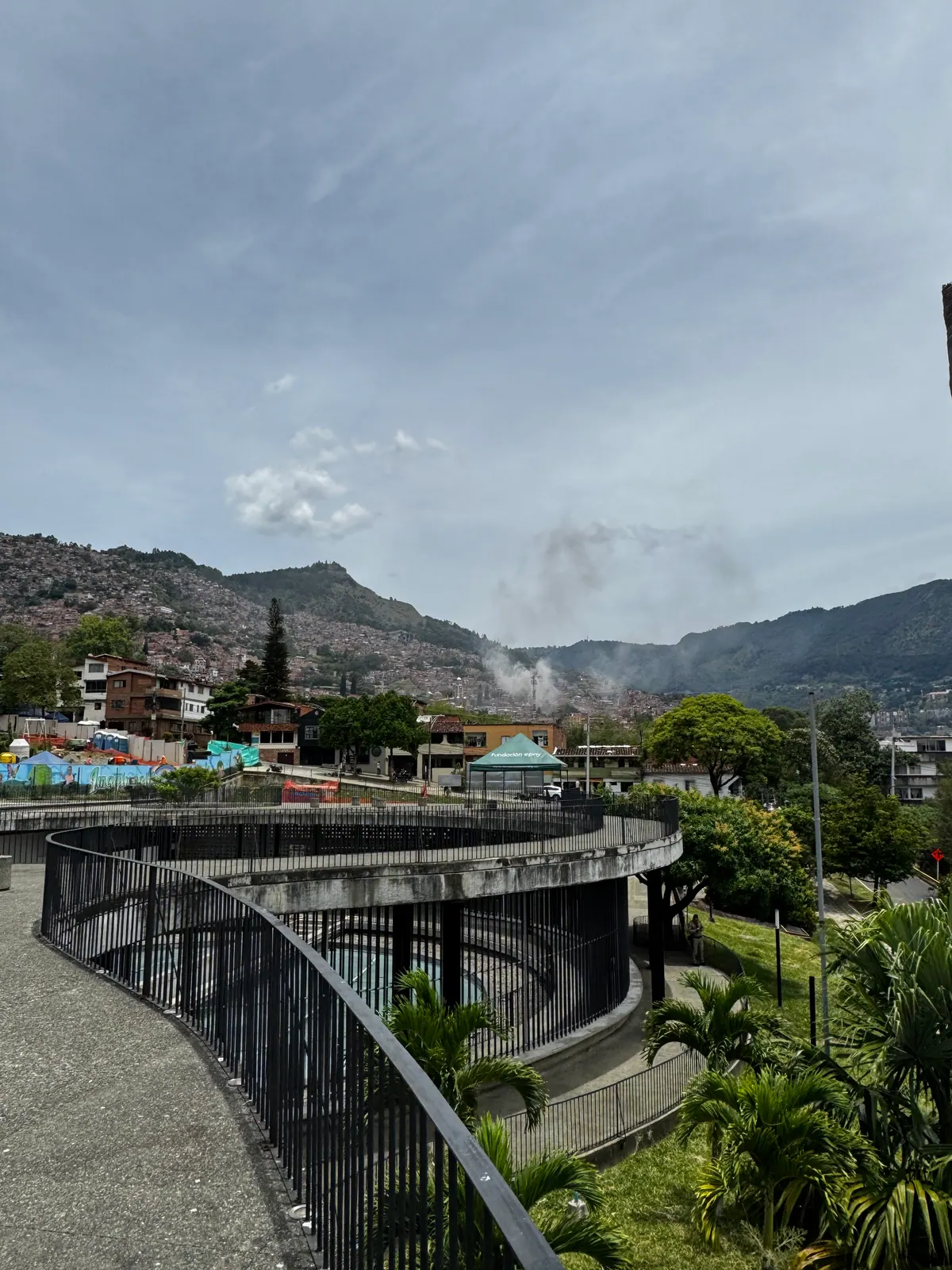
If the centre feels short, three places round out a morning or an afternoon. The Museo de Antioquia, next to Plaza Botero, holds the Botero collection plus colonial and modern art; its official website lists it open Monday to Saturday 9:40 a.m. to 5:30 p.m. and Sundays and holidays 10:00 a.m. to 5:00 p.m.; in January 2026 El Colombiano reported tickets at 18,000 COP for Colombians and 46,000 COP for foreigners, so confirm before you go. Pueblito Paisa, on Cerro Nutibara, is a replica of an Antioquian town with a view over the city. And the UVA de la Imaginación is a viewpoint over the hillsides of Medellín.
To understand how the city has changed, Comuna 13 is the natural next step: murals, outdoor escalators and stories from the neighbourhood. It is best visited with a local guide. For more ideas, see our guide to things to do in Medellín.
More ideas: Things to do in Medellín · Comuna 13 tour
When a private guide beats a free tour
A private guide makes sense if you travel with family or children, if you are short on time, if you do not speak Spanish, if you want to go deeper into the history or if you simply prefer not to walk with a big group. It also helps if you want to combine the centre with other places without dealing with transport and timetables.
PH Tours Medellín runs private tours with hotel pickup and guides in English or Spanish, rated 5.0 on Google and Tripadvisor. You can ask for a private tour guide to build your own route, the Medellín city tour that includes Plaza Botero, or the Comuna 13 tour. Message us on WhatsApp and we will reply with availability.
More information: Private tour guide in Medellín · Medellín city tour · Comuna 13 tour
Medellín walking tour: frequently asked questions
What is a free walking tour in Medellín?
It is a guided walk through the centre where you book for free and, at the end, tip what you think is fair. The guide lives on those tips. It usually lasts about 3 hours and passes squares such as Berrío, Botero and San Antonio.
Are Medellín free walking tours really free?
Booking is free, but a tip is expected at the end. GuruWalk listings suggest amounts that change by tour; they are a suggestion, not an obligation. Confirm on each tour's page.
Does PH Tours run free walking tours?
No. PH Tours Medellín offers private tours with a guide in English or Spanish and hotel pickup. That is why this guide includes a free walking route you can do on your own.
How long is a walking tour of central Medellín?
A typical free tour lasts around 3 hours. Doing the route on your own, with the 6 stops in this guide, allow 2 to 3 hours, plus 1 to 2 if you go into the Museo de Antioquia.
Is it safe to walk around central Medellín?
By day and with precautions, yes: it is a very busy area. There is opportunistic phone theft, so do not use your phone while walking, carry the minimum and avoid empty streets or going at night. With a local guide the experience is calmer.
What is the best time for a walking tour in Medellín?
The morning, between 8:30 and 12:00, and preferably on a weekday. There are more people, more shops open and less risk. Avoid the centre after dark.
How do I get to Plaza Botero from El Poblado?
By Metro to Parque Berrío station (Line A). The plaza is a few minutes' walk from the station. By taxi or app the trip is faster, but it depends on traffic.
What sculptures are in Plaza Botero?
There are 23 monumental bronze sculptures by Fernando Botero, donated to the city in 2000. They have no pedestals and you can see them up close. Next to the plaza are the Palacio de la Cultura and the Museo de Antioquia.
If you would rather go with a guide
A private tour, hotel pickup and a guide in English or Spanish. Message us and we will build the route with you.
Message us on WhatsAppKeep exploring
Sources (11)
- Museo de Antioquia: horarios (web oficial)
- Wikipedia: Plaza Botero
- Wikipedia: Parque de Berrío
- Wikipedia: Iglesia de la Veracruz (Medellín)
- Wikipedia: Palacio de la Cultura Rafael Uribe Uribe
- Wikipedia: Plaza Cisneros (Parque de las Luces)
- El Colombiano: En San Antonio se hizo pedazos el símbolo de la paz
- Alcaldía de Medellín: El Parque de las Luces será apadrinado por comerciantes del Centro
- Atlas Obscura: Parque de las Luces
- El Colombiano: horarios de museos y bibliotecas de Medellín (enero de 2026)
- GuruWalk: free tour por el centro, Real City Tours