
Plaza Botero · Medellín
Plaza Botero in Medellín: the 23 Botero Sculptures and How to Visit
Plaza Botero is a free public square in downtown Medellín (La Candelaria) with 23 bronze sculptures by Fernando Botero. It sits next to the Museo de Antioquia and the Palacio de la Cultura Rafael Uribe Uribe, about 50 metres from Parque Berrío Metro station. Allow one or two hours, visit in daylight and keep your valuables close.
Go with a local guide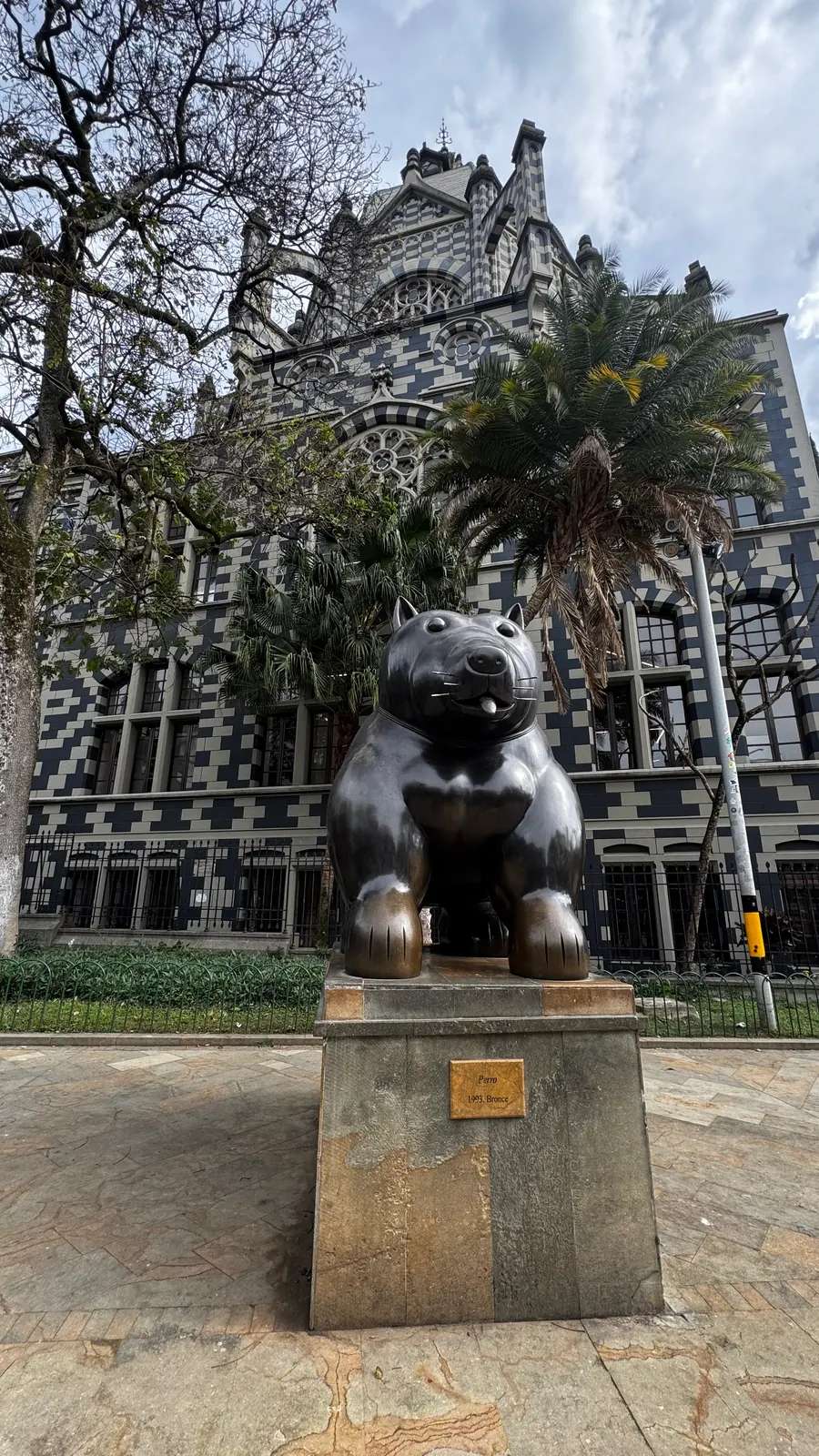
- WhereCalle 52 # 52-43, La Candelaria, downtown Medellín
- Sculptures23 bronzes by Fernando Botero
- Plaza entryFree
- MetroParque Berrío (Line A), about 50 m away
- Museo de AntioquiaMon-Sat 9:40-17:30, Sun and holidays 10:00-17:00 (museum website; confirm before you go)
- Museum closed1 January, 1 May, 24, 25 and 31 December
- Time needed1 to 2 hours with the museum: half a day
- Altitude and size1,495 m above sea level, about 7,000 m²
What Plaza Botero is and why it is worth a visit
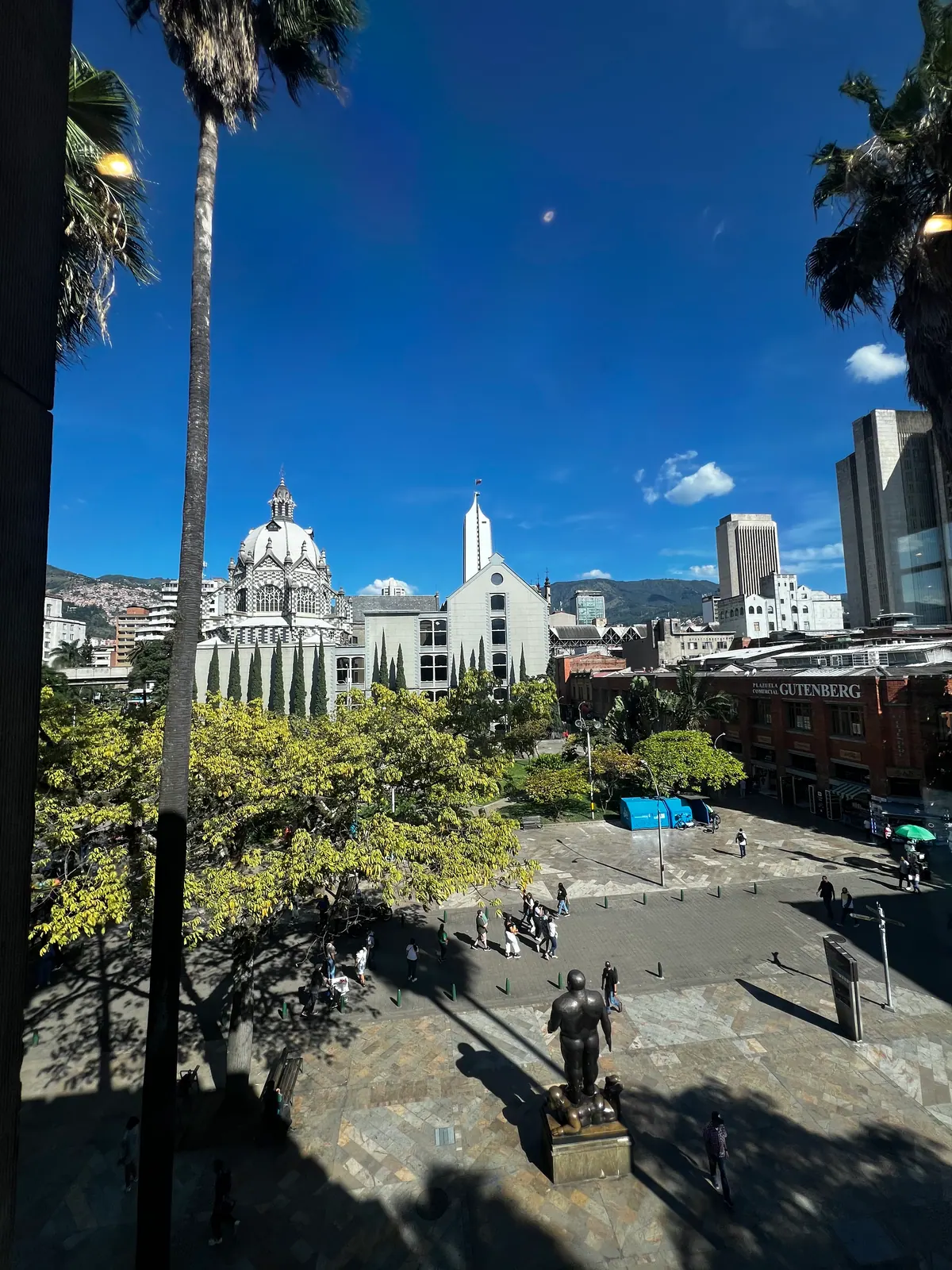
Plaza Botero is the cultural heart of downtown Medellín. It is an open square of about 7,000 square metres surrounded by historic buildings, and Fernando Botero’s sculptures stand at street level with no tall pedestals or fences. You can walk around them, circle them and touch the bronze, which is what makes the visit special.
Botero was born in Medellín in 1932 and is Colombia’s best-known artist worldwide. His style, sometimes called “Boterismo”, exaggerates the volume of people, animals and objects, which is why his figures look inflated: it is his way of looking at the body. The plaza gathers 23 of these pieces in one free place.
If you have little time in Medellín, it is one of the easiest stops to combine: it is in the middle of the centre, beside a Metro station, and a first-class museum is a few steps away. Almost every tour of the centre, including the city tour, includes it.
History: from old neighbourhood to sculpture square
The plaza occupies part of what was known as the Barrio Viejo of the centre. To create it, buildings such as the Luna Park shopping centre and some unfinished Metro offices were demolished. Works ran between 2000 and 2001, driven by the Medellín mayor’s office and the Antioquia governor’s office. The sources we consulted give opening dates between 2000 and 2004, so it is safest to say it opened in the early 2000s.
Botero himself marked the spot of each sculpture and fountain on a plan in 1999. The pieces are his donations to the city, part of a much larger gift to the Museo de Antioquia, which today holds 189 of his works, 187 of them donated by him, according to Noticias Caracol.
More recently the plaza has seen management changes. In 2023 the city launched the “Abrazo a Botero” strategy, with cultural activities to bring in more visitors, and the plaza was fenced off for 334 days to control theft; it reopened on 1 January 2024. Before you go, check whether access has changed.
According to Wikipedia, Botero’s offer arrived by fax on 23 May 1997 and included one million dollars toward construction; the museum reopened in its new building on 14 October 2000. Many of the sculptures had previously stood in museums in Paris, New York and Madrid. Botero died in 2023, and the plaza is now one of the most direct ways to see his work without paying. In May 2025 El Colombiano described it as open, with no fences or barriers, and the city counted more than 35,000 visitors a day during the “Abrazo a Botero” strategy.
The 23 Botero sculptures in Plaza Botero
The 23 works are bronze and are spread across the whole plaza, with no official route. This is the list Wikipedia gives, with the name of each piece:
- Hand, Woman, Woman with Fruit and Cat.
- Adam and Eve, two separate sculptures.
- Horse, Woman with Mirror, Seated Woman and Dog.
- Dressed Man, Dressed Woman and Maternity.
- Sphinx and Rape of Europa, with mythological themes.
- Man on Horseback, Reclining Woman and Walking Man.
- Horse with Bridle, Roman Soldier, Sleeping Woman, Head and Thought.
How to look at them
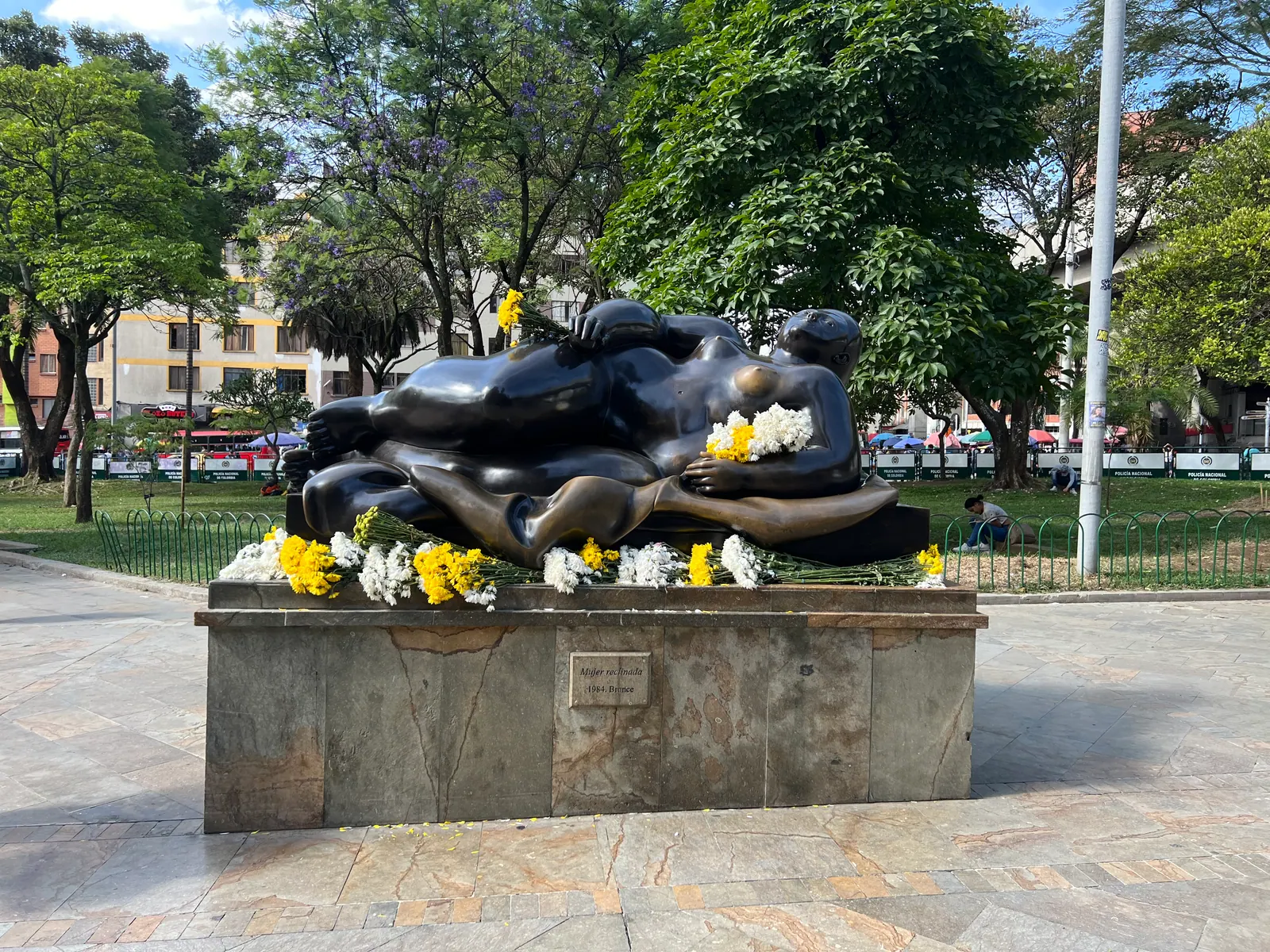
Walk around each piece: the volume changes with the angle. Notice the hands and feet, which are small compared with the body, and the polish of the bronze, shiny where people touch it. The animals, such as the cat, the dog and the horse, are among the most photographed.
A local legend says that rubbing the sculptures brings luck and love, which is why some parts of the bronze are polished. Since the plaza has no official route, a practical way is to enter from Carabobo, circle the Palacio de la Cultura and finish in front of the museum.
- 1Hand
- 2Woman
- 3Woman with Fruit
- 4Cat
- 5Adam
- 6Eve
- 7Horse
- 8Woman with Mirror
- 9Seated Woman
- 10Dog
- 11Dressed Man
- 12Dressed Woman
- 13Maternity
- 14Sphinx
- 15Rape of Europa
- 16Man on Horseback
- 17Reclining Woman
- 18Walking Man
- 19Horse with Bridle
- 20Roman Soldier
- 21Sleeping Woman
- 22Head
- 23Thought
Museo de Antioquia: hours, tickets and what to see
The Museo de Antioquia occupies the former Municipal Palace, an Art Deco building from the 1930s, and faces the same plaza. It is one of the oldest museums in the city: it was founded in the 19th century and moved into this building in 2000. It holds Antioquian, Colombian and international art, religious art, pre-Columbian ceramics and a large Botero collection.
According to the museum’s official website (checked November 2026), it is open Monday to Saturday from 9:40 a.m. to 5:30 p.m. and on Sundays and holidays from 10:00 a.m. to 5:00 p.m. It is closed on 1 January, 1 May and 24, 25 and 31 December. In January 2026 El Colombiano printed a slightly different seasonal schedule (10:00 a.m. to 5:30 p.m., Sundays until 4:30 p.m.), so confirm the hours for your day at museodeantioquia.co or on (604) 251 3636.
The same source listed tickets at 18,000 COP for Colombians and 46,000 COP for foreigners; confirm the current price at the ticket desk or on the website. The City of Medellín’s subsidised-entry programme lists free admission for children under 12, people over 60, students with ID, strata 1, 2 and 3, and other groups.
Among the Botero works there is a room dedicated to Pedrito Botero, with the artist’s most intimate work, and a 1960 mural, Scene with a Rider, recovered years later. Allow at least an hour.
The permanent rooms include the Fernando Botero Room, International Art (the collection the artist donated), Historias para repensar, Promesas de la Modernidad and Variaciones del Presente; the North and South rooms host temporary exhibitions. Useful rules: you may take photos without flash, but not in the Fernando Botero Room; food is only allowed in the café and restaurant; pets are not allowed. Inside you will find Café Urbania, the El Social restaurant (Colombian home cooking), the Bukz bookshop and the museum shop. Guided visits with a mediator are for groups and are arranged by WhatsApp with the museum (+57 305 398 0904).
Palacio de la Cultura Rafael Uribe Uribe: the black-and-white building
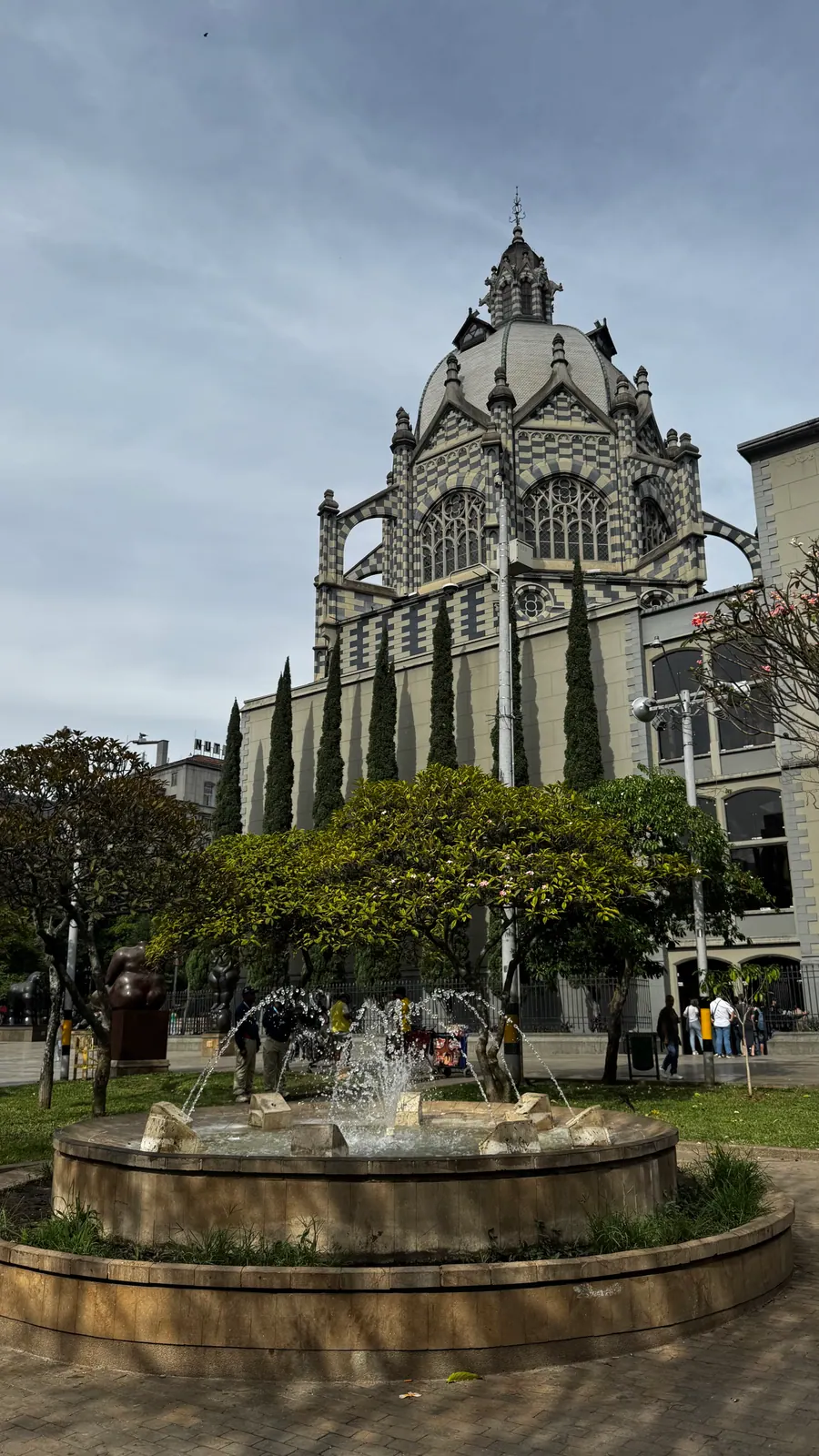
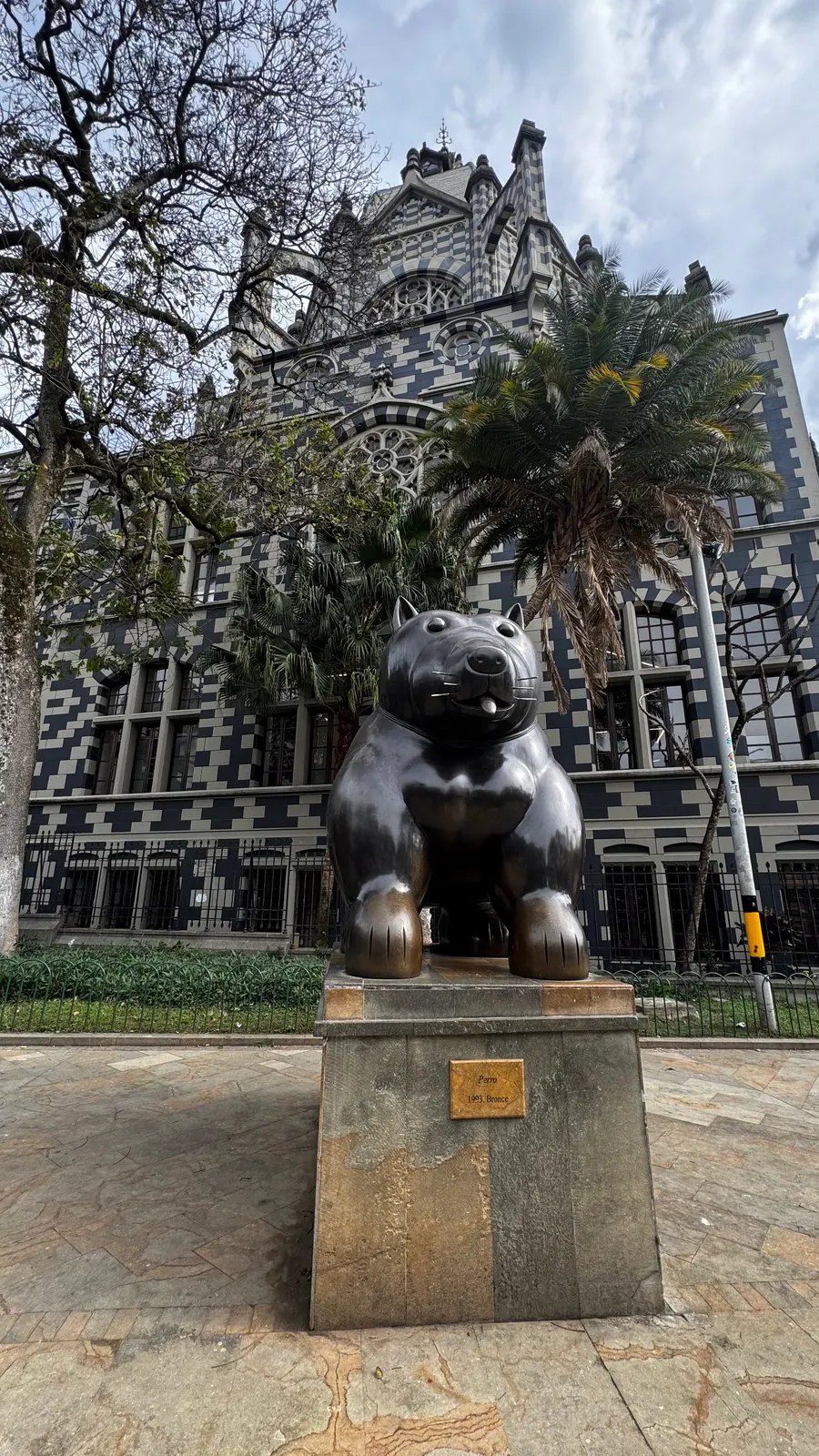
South of the plaza stands the Palacio de la Cultura Rafael Uribe Uribe, a neo-Gothic building by the Belgian architect Agustín Goovaerts. It housed the Antioquia government until 1987, when the administration moved to La Alpujarra, and today it is the seat of the Instituto de Cultura y Patrimonio de Antioquia, with art exhibitions.
Its chessboard-patterned stone facades in black and white make it the backdrop of almost every photo of the plaza. Construction stopped in 1938 and the street facades were finished in 1970. Check with the institute for the opening hours of its exhibitions.
What to see around Plaza Botero
The plaza is in the heart of the historic centre, so you can reach several more things on foot in a few minutes. These are the closest, all within ten minutes’ walk:
- Parque Berrío and its Metro station, right next to the plaza.
- Avenida Carabobo, a pedestrian promenade with street music, fruit sellers, hat shops and department stores.
- Laboratorio del Café, on the plaza itself, to try coffee from the region.
- The Museo de Antioquia shop, for souvenirs and art books.
- The Museo de Antioquia is also the ideal rainy-day plan if the sky closes in.
How to get to Plaza Botero
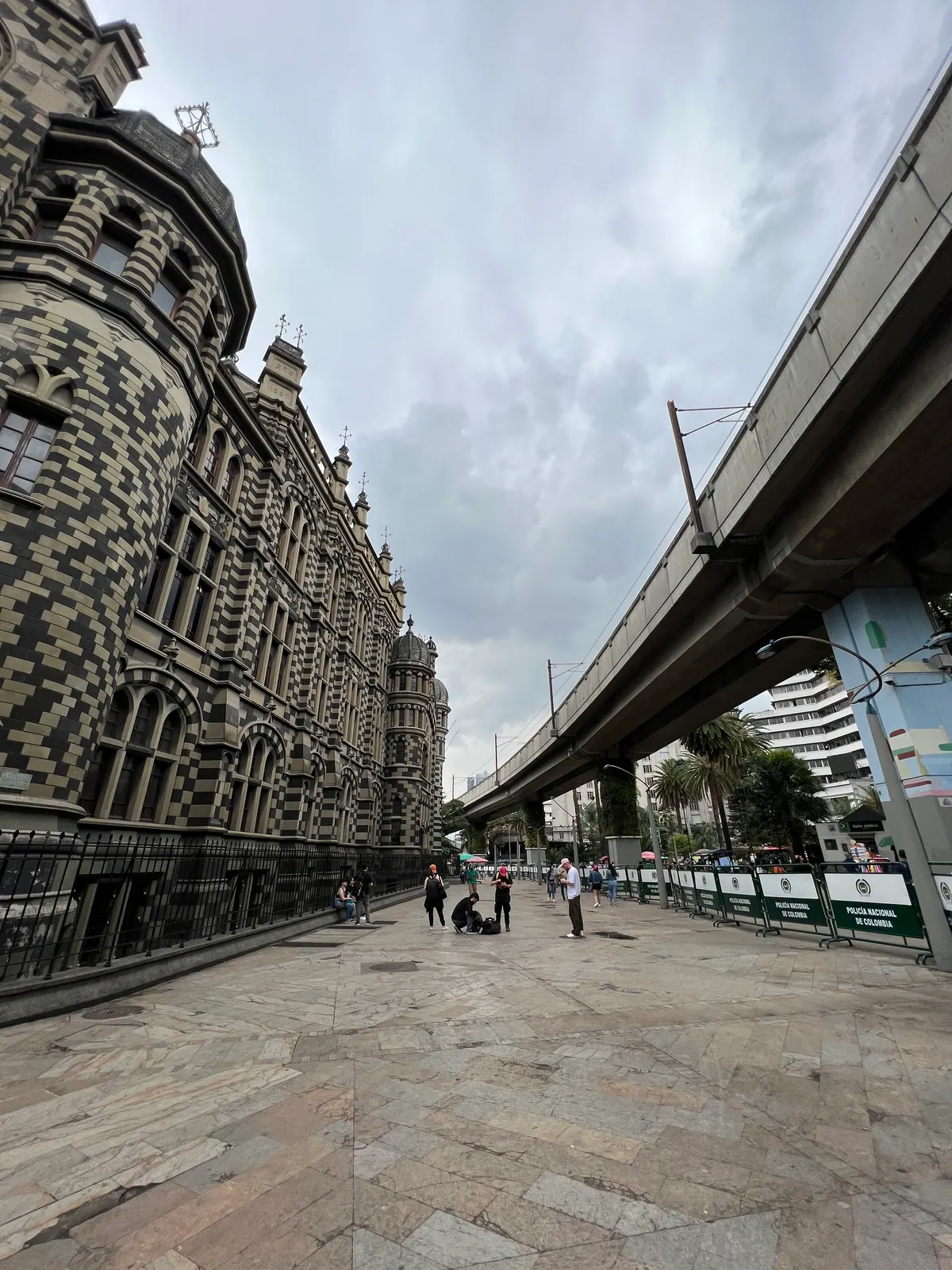
The easiest way is the Medellín Metro. Get off at Parque Berrío station on Line A, about 50 metres from the plaza: you step out onto the street and walk towards the black-and-white building. From El Poblado, take the Metro at Poblado station, on the same Line A, and get off at Parque Berrío.
- Metro: Line A, Parque Berrío station. The most practical and cheapest option.
- Taxi or app: always book through an app or an authorised company, and ask to be dropped at Calle 52 and Carabobo.
- With a tour: if you go with a guide, the vehicle picks you up at your hotel and takes you there, so you do not look for parking in the centre.
Is Plaza Botero safe?
By day, with people around, the plaza is fine to visit, but downtown Medellín has a lot of phone and bag theft aimed at tourists. The city reported fewer crimes inside the plaza while it was fenced in 2023, with 3 thefts from people against 102 in 2022. But those same reports showed thefts rising in nearby neighbourhoods such as Estación Villa and Prado Centro. The published figures are 3 thefts from people and 3 phone thefts in 2023, against 102 and 33 in 2022. Since the 2024 reopening, press reports and Wikipedia record tourist complaints about theft, including a phone taken from a film crew in broad daylight in January 2025, so care is still needed.
- Go by day and avoid the centre at dusk.
- Do not take your phone out on the street or leave it on a café table.
- Carry only what you need: a card and some cash, no jewellery or flashy watches.
- Politely decline offers from “guides” or sellers who approach you on the street.
- If you feel uncomfortable, step into the museum or ask the tourist police for help.
For an overview of the city, read our guide on whether Medellín is safe for tourists. With a local guide, the centre is much more relaxed.
How much time to allow and what to see nearby
To see the sculptures and photograph the Palacio de la Cultura, 45 minutes is enough. With the Museo de Antioquia, allow two to three hours. If you still have energy, Parque Berrío and the historic centre are a few steps away.
If you want to understand the centre beyond the sculptures, the city tour includes the plaza and our walking tour guide helps you explore the centre on foot. Afterwards, many travellers continue to Comuna 13 or the Metrocable.
Best time of day
In the morning there are fewer people and better light. On weekends and holidays the plaza fills up, with music and street sellers, which makes it livelier but less calm for photos.
Visit the plaza with a local PH Tours guide
PH Tours Medellín runs private tours with English- and Spanish-speaking guides and hotel pickup. Rated 5.0 on Google and Tripadvisor, it is a way to see Plaza Botero with context: who Botero was, what each piece says and how to move around the centre safely.
Message us on WhatsApp at +57 305 788 2726 and build your visit around your schedule, whether the city tour, a private tour or a walking route.
Frequently asked questions
How many sculptures are in Plaza Botero?
There are 23 bronze sculptures by Fernando Botero, including Hand, Cat, Horse, Adam, Eve, Maternity, Sphinx and Roman Soldier.
How much does it cost to enter Plaza Botero?
Nothing: it is a public square and entry is free. Only the Museo de Antioquia, on the same plaza, charges admission (18,000 COP for Colombians and 46,000 COP for foreigners according to El Colombiano, January 2026, with free-entry groups).
What are the opening hours of the Museo de Antioquia?
According to the museum’s website (November 2026), Monday to Saturday 9:40 a.m. to 5:30 p.m. and Sundays and holidays 10:00 a.m. to 5:00 p.m. It is closed on 1 January, 1 May and 24, 25 and 31 December. Confirm before you go, as hours can change.
Is Plaza Botero safe to visit?
By day and with care, yes. The centre has phone theft aimed at tourists, so do not use your phone on the street, carry the minimum, avoid the centre at night and consider going with a local guide.
How do I get to Plaza Botero by Metro?
Take Line A of the Metro and get off at Parque Berrío station, about 50 metres from the plaza. From there you walk to the Museo de Antioquia and the Palacio de la Cultura.
How long do you need at Plaza Botero?
About 45 minutes to see the sculptures and take photos. With the Museo de Antioquia, two to three hours.
What is the black-and-white building at Plaza Botero?
It is the Palacio de la Cultura Rafael Uribe Uribe, a neo-Gothic building by the architect Agustín Goovaerts that housed the government of Antioquia and is now the seat of the Instituto de Cultura y Patrimonio de Antioquia.
Can you touch the Botero sculptures?
Yes, they stand at ground level and people touch them and take photos with them. Just watch your belongings while you pose.
Is Plaza Botero open 24 hours?
It is a public square with no fences since the closure ended in January 2024, so there is no ticket desk or entry time. That does not make a night visit a good idea: go by day. The Museo de Antioquia does have hours (Monday to Saturday 9:40 a.m. to 5:30 p.m. and Sundays and holidays 10:00 a.m. to 5:00 p.m., per its website).
What is the difference between Plaza Botero and the Museo de Antioquia?
The plaza is the free open-air space with the 23 sculptures. The museum is the Art Deco building facing the plaza, with paid admission, a Botero room and Antioquian, Colombian and international art.
Can you take photos inside the Museo de Antioquia?
Yes, without flash, in most rooms. Photos are not allowed in the Fernando Botero Room. Food is only allowed in the café and restaurant, and pets are not admitted.
When is the Museo de Antioquia closed?
It is closed on 1 January, 1 May and 24, 25 and 31 December, according to its official website. Useful to know if you travel at Christmas or New Year.
What else is there to see near Plaza Botero?
Parque Berrío and its Metro station, the pedestrian Avenida Carabobo, the Laboratorio del Café on the plaza and the Museo de Antioquia shop. With more time, continue through the centre with the walking tour or the city tour.
Who gave the Plaza Botero sculptures to the city?
Fernando Botero, born in Medellín in 1932, donated them. His offer arrived in 1997 and in 1999 he marked the place of each piece on a plan himself. The Museo de Antioquia also holds 189 of his works.
More to see in Medellín
- Medellín city tourA private Medellín city tour: Plaza Botero, Pueblito Paisa and local stories, with hotel pickup, a comfortable vehicle and your own guide.
- Private tour guideA private tour guide in Medellín with a comfortable vehicle and hotel pickup. Your group, your pace, English or Spanish. Plan it on WhatsApp.
- Comuna 13 tourA private Comuna 13 tour: street art, outdoor escalators and the real history of the barrio, with pickup at your hotel in Medellín.
- Private driverPrivate driver and car service in Medellín by the hour, day or several days. SUVs, Chevrolet Tahoe and vans. Ask us on WhatsApp for the price.
- Medellín walking tour
- Is Medellín safe for tourists?
- Things to do in Medellín
- Medellín Metrocable guide
- Pueblito Paisa
- Medellín Christmas lights
Private tours with hotel pickup, guides in English and Spanish.
Message us on WhatsAppSources
- Wikipedia (es): Plaza Botero
- Wikipedia (en): Botero Plaza
- Wikipedia (es): Museo de Antioquia
- Wikipedia (es): Palacio de la Cultura Rafael Uribe Uribe
- Noticias Caracol: el Museo de Antioquia resguarda la obra de Botero
- Alcaldía de Medellín: Abrazo a Botero
- El Colombiano: las cifras del cerramiento de Plaza Botero
- Alcaldía de Medellín: ingreso subsidiado a museos
- Museo de Antioquia: horarios, normas y servicios (web oficial)
- Medellín Travel: Plaza Botero, un museo en una plaza pública
- El Colombiano: la Plaza Botero otra vez está abierta (mayo de 2025)
- El Colombiano: horarios de museos y bibliotecas de Medellín (enero de 2026)
Photos: PH Tours Medellín’s own archive.